
Judging an Established Brand’s First Weeks on a New Platform
Tell whether an agency translated a brand’s existing voice into a new platform’s grammar, or just crossposted old content and hoped no one would notice.
Tell whether an agency translated a brand’s existing voice into a new platform’s grammar, or just crossposted old content and hoped no one would notice.
A long text thread has no image to hide behind. Here’s how to read structure and pacing so you can tell earned length from padding built to hit a number.
A rebrand’s transition weeks reveal more about an agency’s systems thinking than the finished redesign ever will. Here is what to watch for on screen.
When a creator makes the post but an agency wrote the brief, here’s what to actually judge: the brief and the edit notes, not the creator’s raw talent.
A big comment count can mean manipulation or genuine conversation. Here’s how to tell which one you’re looking at by reading the thread, not the caption.
A practical test for judging social video craft: mute it first. See whether the edit, text and pacing carry the idea, or whether it only works with sound on.
Generic alt text and careless captions are a tell of a templated account, and here is exactly what considered accessibility work looks like on screen.
Speed and craft are different questions. Learn to read a brand’s public crisis response for specificity and accountability, apart from how fast it went out.
Almost all behind the scenes content is staged. The tell is whether true, specific detail about the workplace gets through, or it is dressed to look candid.
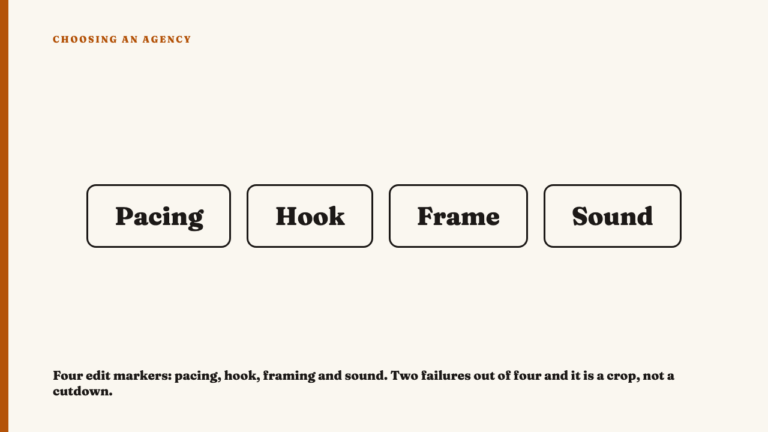
Repurposed clips can look native or lazy. Here are the specific pacing, framing and hook markers that separate a considered cutdown from a rushed crop.