
What You Can Judge in Work You Cannot Read
Rhythm, framing, performance and edit survive translation. Copy and wordplay do not. What to grade yourself and how to get a native reader’s second opinion.
How to tell good agency work from good agency marketing
Rhythm, framing, performance and edit survive translation. Copy and wordplay do not. What to grade yourself and how to get a native reader’s second opinion.
A clean, well-lit room can still say nothing. How to tell whether light, background and location in a social video were chosen for the idea, or just tidied.
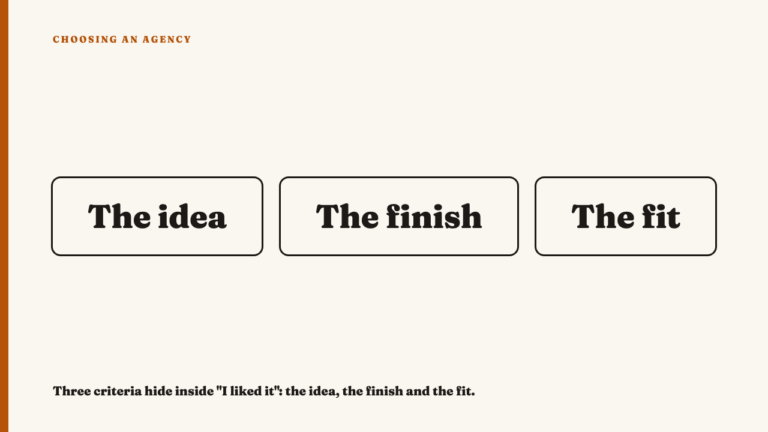
When two people watch the same agency reel and disagree, the gap is usually a different criterion. Name it first, then run a joint viewing in four passes.
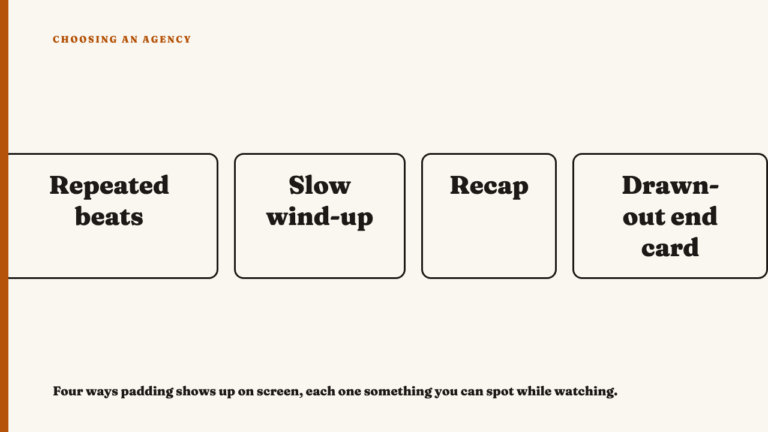
Cut the middle third in your head. If the idea survives, the video was padded. A viewing test for judging whether runtime fits the idea, at any length.
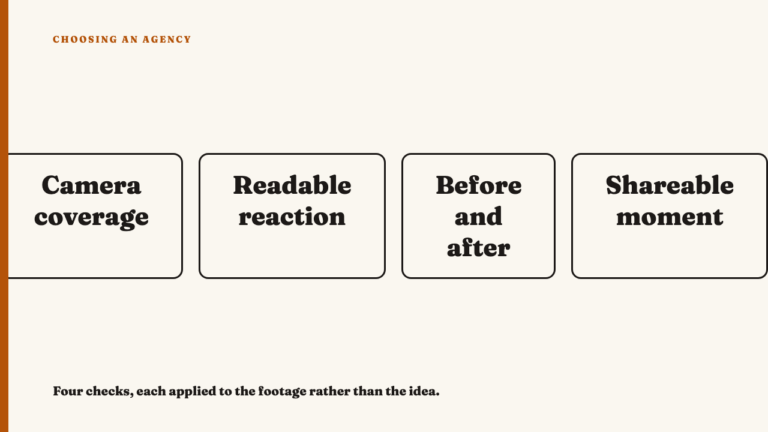
Judge a pop-up, prank or physical stunt by the footage, not the idea. Four tests for coverage, readable reactions, a clear before and after, a shareable moment.
A grade that holds across shots and across a month means someone owned the finish. Here are the skin tone, black level and mixed footage tells to check.
Type exposes a design process faster than imagery. Three looks at hierarchy, one type system across formats and text on video break a tie between agencies.
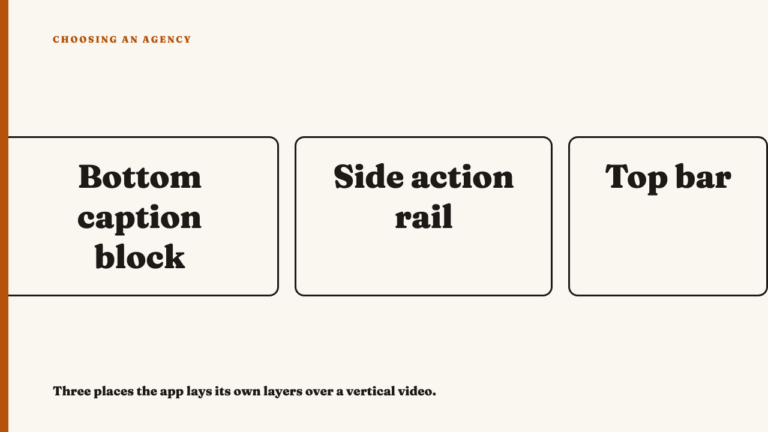
A clean export hides what the app covers. Learn to judge whether an agency composed for the part of the frame viewers actually see, not the full canvas.
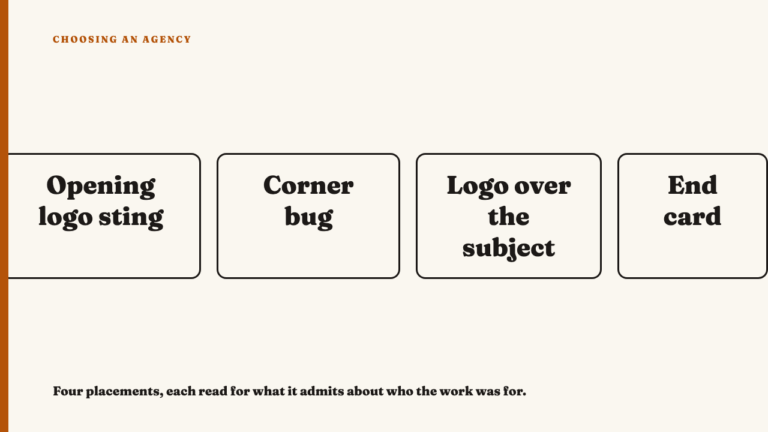
Logo bugs, watermarks and end cards show whether a brand was designed into a social video or stamped on afterwards. Here is what to look for on screen.
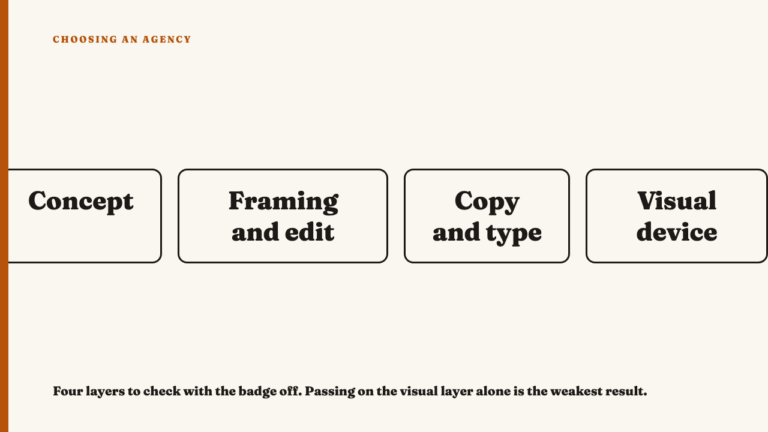
Cover the logo, handle and brand colours, then look at what is left. A viewing method for telling work with a voice from work that leans on its label.